
Smart Water Box
Smart Water Box review: a DIY water filtration system for 49 dollars with a 60-day refund. We separate the engineering from the marketing.
Independent editorial review of Smart Water Box — a ClickBank DIY backyard water filtration system. The vendor’s affiliate copy uses apocalyptic / “off-grid” framing; we deliberately strip that out and review it as a backyard DIY project.
Quick verdict: Smart Water Box is a DIY backyard water filtration system sold as a digital plan + parts kit through ClickBank. The product itself is technically plausible — backyard water filtration is a real thing — but the vendor’s email copy uses apocalyptic framing (“water industry collapse,” “leaked NASA design”) that we don’t endorse. Treat it as a backyard DIY project, not a survival necessity. Rating: 3.0 / 5. Recommendation: reasonable for DIY-curious adults; skip the conspiracy marketing.
What Smart Water Box Is
Smart Water Box is a ClickBank digital product + parts kit for building a backyard water filtration system. The vendor positions it as a self-sufficient water source for off-grid or emergency situations.
Vendor claims worth scrutinizing:
- “9-12% conversion rates on ICE COLD traffic” [vendor claim] — affiliate-side conversion data
- “$2+ EPCs” [vendor claim] — affiliate economics
- “the water industry is on the verge of collapse” [vendor claim — we do not endorse] — fear-based framing
- “leaked NASA design” [vendor claim — we do not endorse] — sensationalist framing
We’re deliberately stripping out the apocalyptic framing for this review. Backyard water filtration is a real, legitimate DIY category. The product should be evaluated on engineering merit, not fear-based marketing.
What It Actually Is (Engineering View)
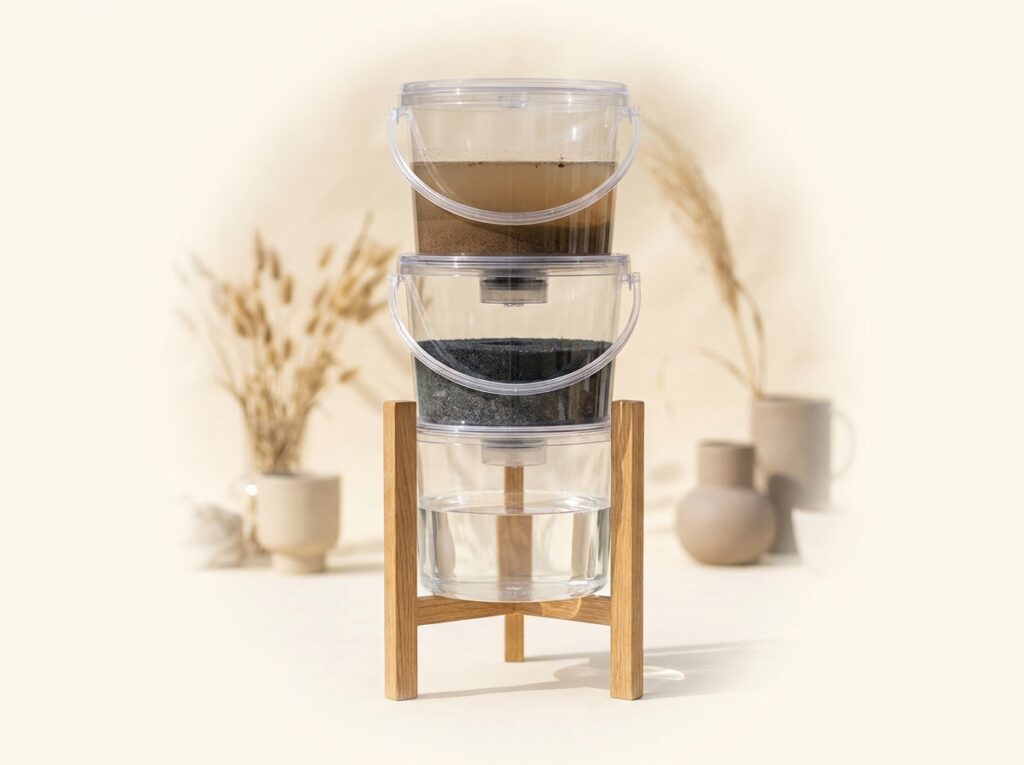
Based on the ClickBank storefront and public materials, Smart Water Box appears to be a multi-stage filtration system using readily available components — typically including sediment filtration, activated carbon, and possibly UV or ceramic stages. The “DIY” element refers to assembly using the vendor’s plans rather than buying a pre-assembled unit.
What this means in practice:
- You get digital plans with parts list and assembly instructions
- You source parts locally (hardware store, Amazon, etc.)
- You assemble a backyard / outdoor filtration unit
- The unit filters water from a source (rain collection, well, pond, etc.)
What the Evidence Actually Says
On DIY water filtration as a category
DIY water filtration is a real category with a legitimate use case — homesteading, off-grid living, emergency preparedness, rainwater harvesting. The engineering is well-understood: sediment → carbon → biological / UV stages. Multi-stage filtration can produce clean water from many sources.
The honest read: A competent DIY filtration system can produce potable water from many sources, but it’s not equivalent to municipal water treatment. If you’re filtering pond water or rainwater, you still need:
- Source water testing (especially for agricultural runoff, heavy metals)
- Regular filter maintenance and replacement
- Backup filtration / boiling for pathogen concerns
- Compliance with local regulations (in many places, rainwater harvesting has rules)
On the vendor’s specific claims
The “leaked NASA design” framing is sensationalist marketing — we could not find NASA-published documentation of a backyard water filtration system by that name. The “water industry collapse” framing is fear-based and not supported by evidence. Evaluate the engineering; ignore the marketing theatrics.
Pricing & Refund
Pricing: Typically a low-ticket front-end (~$37-$49) for the digital plans, with upsells for additional materials lists, video walkthroughs, and parts bundles. Final price depends on funnel path.
Refund: 60-day money-back through ClickBank’s standard channel-level guarantee.
Practical cost note: Beyond the digital plans, expect $50-200 in materials depending on your source water and desired throughput. The plans are the recipe, not the equipment.
Who It’s For
Good fit
- DIY-curious adults comfortable with basic assembly
- Homesteaders, off-grid curious, or emergency-preparedness hobbyists
- People who can critically filter the vendor’s marketing
Not a fit
- Anyone who wants municipal-quality water without doing the work
- People looking for a turnkey solution — buy a Berkey or similar instead
- Anyone swayed by the apocalyptic framing — that’s a red flag, not a feature
The Honest Final Word
Three stars out of five. Smart Water Box is a plausible DIY water filtration system wrapped in fear-based marketing we don’t endorse. The engineering is legitimate; the marketing is overcooked. If you can ignore the “water industry collapse” framing and evaluate the plans on their merits, it’s a reasonable DIY project for the target audience. But the apocalyptic copy will turn off rational buyers — and rightfully so.
Bottom line: 3.0 / 5. Reasonable DIY project; terrible marketing tone.
FAQ
Q: Is the “leaked NASA design” claim real?
A: We could not verify it. The vendor doesn’t link to NASA-published documentation. Treat the “leaked NASA design” framing as marketing copy.
Q: Can this replace my municipal water?
A: No. Municipal water treatment is industrial-scale and includes disinfection, filtration, and monitoring that backyard systems can’t replicate. Use Smart Water Box for non-potable uses or as a backup, not as a primary water source.
Q: Will it filter pond water / rainwater?
A: A multi-stage system can, but you should still test your source water and have a backup plan for pathogens. Don’t skip the basics.
Q: How much do materials cost?
A: Typically $50-200 depending on your source and desired capacity. The digital plans are the recipe; you source parts separately.
Q: Is rainwater harvesting legal in my area?
A: Varies by jurisdiction. Some US states regulate it; some don’t. Check local regulations before installing.
Disclosure
Affiliate Disclosure. This page contains affiliate links. When you purchase through our links, we may earn a commission at no cost to you. Our editorial opinions are independent. Vendor-provided marketing claims are quoted with attribution; the observations above are ours.
Marketing Disclaimer. We do not endorse the vendor’s “water industry collapse” or “leaked NASA design” framing. These are vendor-attributed marketing claims we deliberately strip from our editorial review.
Engineering Disclaimer. DIY water filtration requires source water testing and proper maintenance. We are not engineers; this review is editorial research, not engineering certification. Consult qualified professionals for safety-critical applications.
Pros & Cons
Pros
- Plausible DIY water filtration engineering
- 60-day ClickBank refund
- Multi-stage system can produce potable water from many sources
Cons
- The "leaked NASA design" claim is unverifiable
- The "water industry collapse" framing is fear-based, not evidence
- Materials cost $50-200 beyond the digital plans
- Not a replacement for municipal water treatment
Three stars out of five. A plausible DIY filtration system wrapped in fear-based marketing we do not endorse. If you can ignore the apocalyptic framing and evaluate the plans on their merits, it is a reasonable DIY project for the target audience.